

Best Magnesium for Migraines & Headaches
Magnesium Forms, Dosage & How It Helps
Migraines can feel unpredictable, but sometimes, the missing piece of relief comes down to a single mineral. Magnesium plays a critical role in brain health, nerve signaling, and inflammation control — all of which affect migraine activity.
At Transcend Headache Clinic, our neurology-trained specialists often recommend magnesium as part of a comprehensive migraine treatment plan, combining science-based care with a personalized approach.
If you’ve wondered which magnesium is best for migraines, how it works, and whether it could help you, this guide breaks it all down — in plain English.
TABLE OF CONTENTS
- What Is Magnesium & Why It Matters
- What Causes Low Magnesium?
- Signs of Low Magnesium?
- Best Types of Magnesium for Migraines
- How Magnesium Supports Migraine Prevention
- Dietary Sources of Magnesium
- Recommended Dosage & Safety Tips
- When to See a Specialist
What is Magnesium?
Magnesium is an essential mineral that supports more than 300 biochemical reactions in the body — including muscle relaxation, nerve function, energy production, and stress regulation.
For people with migraines, magnesium does more than keep things running smoothly — it helps stabilize the nervous system and regulate electrical activity in the brain. When magnesium levels drop, nerve cells become more excitable, which can trigger the cascade of changes that lead to migraine pain.
Some of the most important benefits of magnesium include:
-
- Supporting healthy nervous system function and calming overactive nerve activity
- Reducing inflammation that can worsen headaches or migraines
- Improving sleep quality and relaxation, both key to nervous system recovery
- Helping maintain steady energy and blood sugar levels that prevent migraine triggers
Low magnesium has also been linked to hormonal changes and stress sensitivity — both common migraine triggers. Because of this, magnesium supplementation has become one of the most studied and recommended natural approaches to migraine prevention.
QUICK FACT: Up to 50% of people with migraines have lower-than-average magnesium levels, according to one study.
What Causes Low Magnesium?
Low magnesium, or hypomagnesemia, can develop from a variety of factors — many of which are surprisingly common. Stress, caffeine, and processed foods all deplete magnesium stores, while certain medications and health conditions interfere with absorption.
You may be more likely to experience magnesium deficiency if you:
-
- Lack magnesium in your diet (most common cause for deficiency), such as a diet high in refined carbs or low in whole foods
- Drink large amounts of caffeine or alcohol
- Experience frequent stress or poor sleep
- Take certain medications, including diuretics, birth control pills, or medications used for heartburn or GERD, such as Nexium, Protonix or Prilosec
- Have specific health conditions, including Crohns or celiac disease, type 2 diabetes, gastrointestinal disorders, chronic kidney disease, thyroid issues, or parathyroid problems
Over time, these factors can lower your magnesium levels enough to cause symptoms — and in migraine patients, that often means more frequent or severe attacks.
Signs of Low Magnesium
Because magnesium affects muscles, nerves, and mood, symptoms can be wide-ranging. Common signs include:
-
- Frequent headaches or migraines
- Muscle cramps or twitching
- Fatigue, low energy, weakness or overall feeling unwell
- Brain fog or difficulty concentrating
- Dizziness or lightheadedness
- Nausea, vomiting or poor appetite
- Tingling or numbness in the hands or feet
- Increased anxiety or irritability
- Seizures or changes in heart rhythm (in severe cases)
If you suspect low magnesium, talk to a healthcare provider before starting supplements. At Transcend, our specialists can identify whether magnesium deficiency may be contributing to your headaches — and build a treatment plan tailored to you.
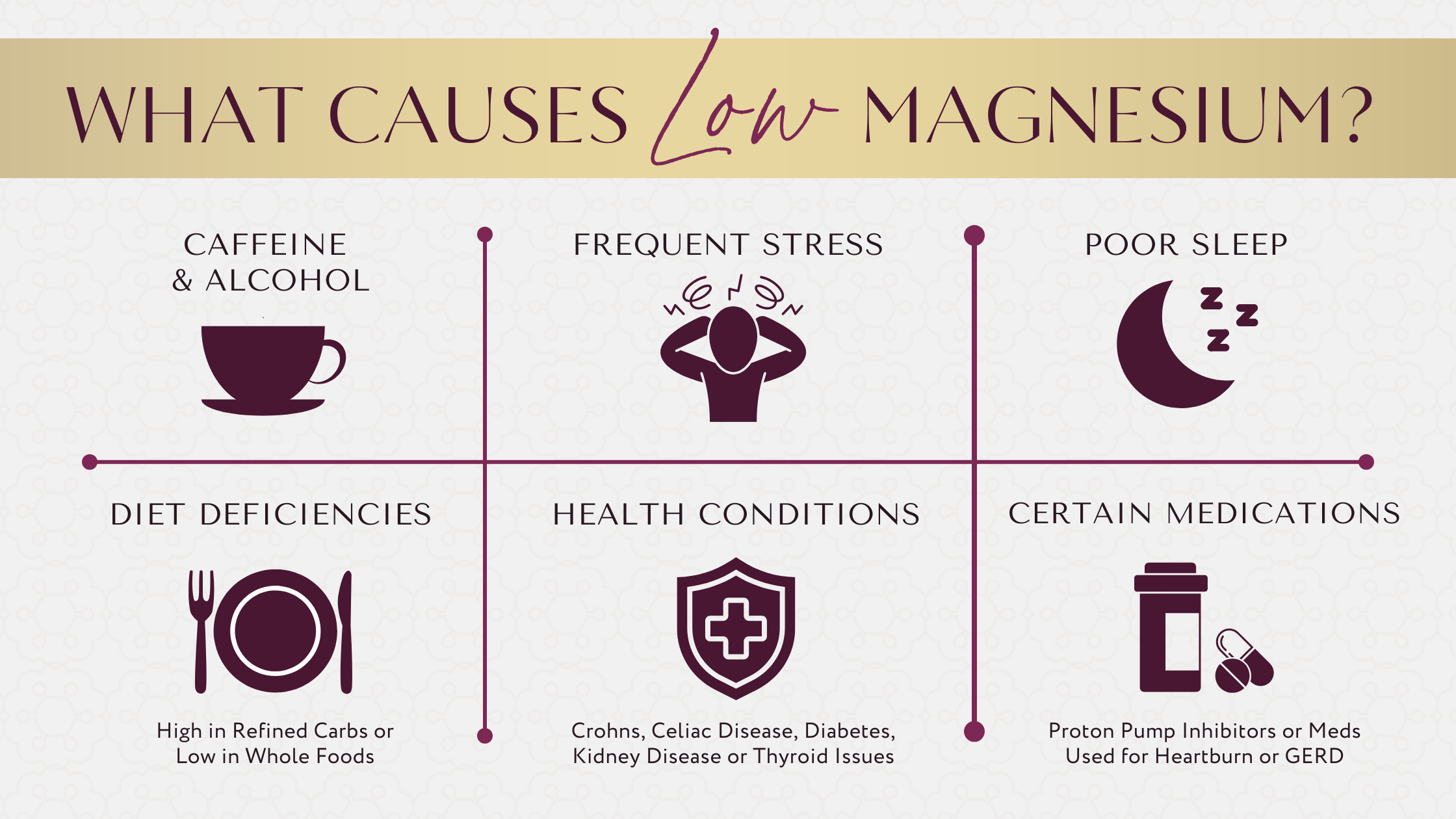 Low magnesium levels can result from diet deficiencies, stress, poor sleep, or certain medical conditions — all of which may contribute to migraine risk.
Best Types of Magnesium for Migraines
Not all magnesium supplements work the same — and choosing the right type can make a big difference in how well your body absorbs it and how your migraines respond. Below are the most common forms used for migraine prevention, each with unique benefits.
Magnesium Oxide
Magnesium oxide is the most studied and widely used form in migraine prevention research. It’s affordable and effective at restoring magnesium levels but may cause mild stomach discomfort or loose stools in some people.
A 2019 study comparing magnesium oxide to the prescription migraine medication valproic acid found similar reductions in attack frequency — showing magnesium can be a safe, natural alternative for many patients.
Magnesium Glycinate
Magnesium glycinate is gentle on the stomach and highly absorbable, making it ideal for long-term use. It also supports relaxation and better sleep — both essential for reducing migraine triggers related to stress and poor rest.
Magnesium Citrate
Magnesium citrate offers moderate absorption and can help relieve constipation, a common side effect of certain migraine medications. However, it may cause mild digestive upset in higher doses.
Other Forms of Magnesium
Other forms, such as magnesium malate, L-threonate, and taurate, may provide additional benefits — from improved energy production to enhanced cognitive function — but are less researched for migraine prevention.
Still not sure which type is right for you? Our migraine specialists would be happy to help!
How Magnesium Supports Migraine Prevention
Magnesium plays a key role in how your brain and nervous system communicate. It helps regulate the electrical and chemical activity in the brain — which may prevent the cascade that triggers migraine pain.
Often called a “calming nutrient” for the nervous system, magnesium helps reduce overstimulation in the brain that can contribute to migraine activity. Research also suggests it may help prevent cortical spreading depression — the wave of electrical activity believed to cause the visual and sensory disturbances known as migraine aura.
By restoring balance in nerve signaling, magnesium can help lower migraine frequency, reduce sensitivity to triggers, and improve recovery between attacks.
RELATED: Vitamin Infusions for Migraine, Headache & Energy Support

Dietary Sources of Magnesium
The typical American diet is very low in magnesium, as well as many other essential nutrients. Approximately 1 in 2 people do not get enough magnesium in their diet. Following a Mediterranean style diet, that is rich in magnesium, can be sufficient enough to increase magnesium levels in the body.
The best place to start increasing your magnesium intake is through food. Magnesium-rich foods provide steady, natural absorption and support overall health alongside migraine prevention.
Magnesium-rich foods include:
-
- Leafy greens like spinach, kale, swiss chard or collard greens
- Avocados and bananas
- Nuts and seeds such as almonds, cashews, flaxseed, peanuts, pumpkin seeds, or chia seeds
- Greek yogurt and low-fat milk
- Beans and legumes, such as black beans, edamame or lima beans
- Whole grains like quinoa, brown rice, and oats or oat bran
Tip: Aim to include at least one magnesium-rich food at each meal.
Recommended Magnesium Dosage & Safety Tips
The recommended daily magnesium intake for adults is typically 400–500 mg for men* and 300–350 mg for women*, though individual needs vary. (For pregnant women, we recommend increasing magnesium to 360 mg* per day.)
Before starting any new supplement, consult your healthcare provider — especially if you take prescription medications or have kidney issues.
Possible mild side effects may include:
-
- Nausea, upset stomach or stomach cramping
- Loose stools or diarrhea (especially with magnesium oxide or citrate)
Over-supplementation risks: Taking too much magnesium can cause low blood pressure, muscle weakness, or irregular heartbeat, so always follow professional guidance.
*For more detailed information, see the NIH Magnesium Fact Sheet.

When to See a Migraine Specialist
If you experience frequent or severe headaches — or suspect low magnesium levels could be contributing — it’s time to seek specialized care. At Transcend Headache Clinic, our providers assess your unique triggers, guide magnesium use, and develop a treatment plan tailored to you.
If you’re looking for a migraine specialist in Fargo or West Fargo, our team at Transcend Headache Clinic can help you find lasting relief.
Call us at 701.809.7650, or book an appointment online to start your journey toward better headache and migraine care.

Transcend Headache Clinic believes no one should have to live with chronic pain or uncertainty. Founded by neurology-trained nurse practitioners Kyrie Severson, APRN, AQH, and Tiffany Eslinger, APRN, AQH, our West Fargo team pairs advanced expertise with a deeply personal approach to help patients overcome headaches and migraines — and get back to life.