
 Seasonal allergies, weather changes, and sinus inflammation can all contribute to worsening headaches during the spring months.
Why Sinus Headaches Are More Common During Spring
How Allergies, Weather Changes & Seasonal Routines Can Trigger Headaches
For many people, spring brings warmer weather, blooming trees, and more time outdoors. But for others, it also brings an increase in sinus headaches, facial pressure, and migraine symptoms.
Seasonal allergies, shifting weather patterns, changing routines, and fluctuations in barometric pressure can all contribute to spring headaches — especially for people who are already prone to migraines or sinus-related symptoms. Even factors like dehydration, increased outdoor exposure, poor sleep, and schedule changes can play a role.
While many people assume their symptoms are simply “sinus headaches,” that’s not always the full story. In fact, migraines are commonly mistaken for sinus headaches because the symptoms can overlap. Understanding what’s actually triggering your headaches is the first step toward finding effective, lasting relief.
TABLE OF CONTENTS
- How Allergies & Sinus Pressure Trigger Headaches
- Common Symptoms of Sinus Headaches
- Sinus Headache vs Migraine: How to Tell the Difference
- Weather & Barometric Pressure Headaches
- Lifestyle Factors That Can Worsen Sinus Headaches
- Tips to Reduce Spring & Sinus Headaches
- When to See a Sinus Headache Specialist
- Sinus Headache Relief in Fargo & West Fargo
How Allergies & Sinus Pressure Trigger Headaches
Why Seasonal Allergies Can Trigger Sinus Headaches
Spring affects more than just the weather — it can also affect your nervous system, sinuses, hydration levels, sleep patterns, and overall headache sensitivity. For many people, the transition from winter to spring creates the perfect combination of triggers that can worsen headaches and migraines.
Seasonal Allergies & Sinus Inflammation
One of the biggest contributors to spring headaches is the increase in allergens like pollen, mold, and grass. These allergens can trigger inflammation and congestion within the sinuses, leading to facial pressure, forehead pain, and discomfort around the eyes.
Rapid Weather & Barometric Pressure Changes
Spring weather often brings rapid shifts in temperature, humidity, and barometric pressure. Some people — especially those prone to migraines — are particularly sensitive to these environmental changes, which can trigger headache symptoms.
Sleep, Hydration & Routine Changes
Longer daylight hours, busier schedules, increased outdoor activities, dehydration, and disrupted sleep routines can all contribute to headaches during spring. When multiple triggers happen at once, symptoms may become more frequent or severe.
Increased Nervous System Sensitivity
For people already prone to headaches or migraines, spring can feel like a season of constant triggers. Environmental changes may increase nervous system sensitivity, making the body more reactive to things like stress, weather, allergens, and routine disruptions.
Because spring headaches can be triggered by several different factors, the symptoms can vary from person to person. Understanding the most common signs and symptoms can help you better identify what type of headache you may be experiencing.
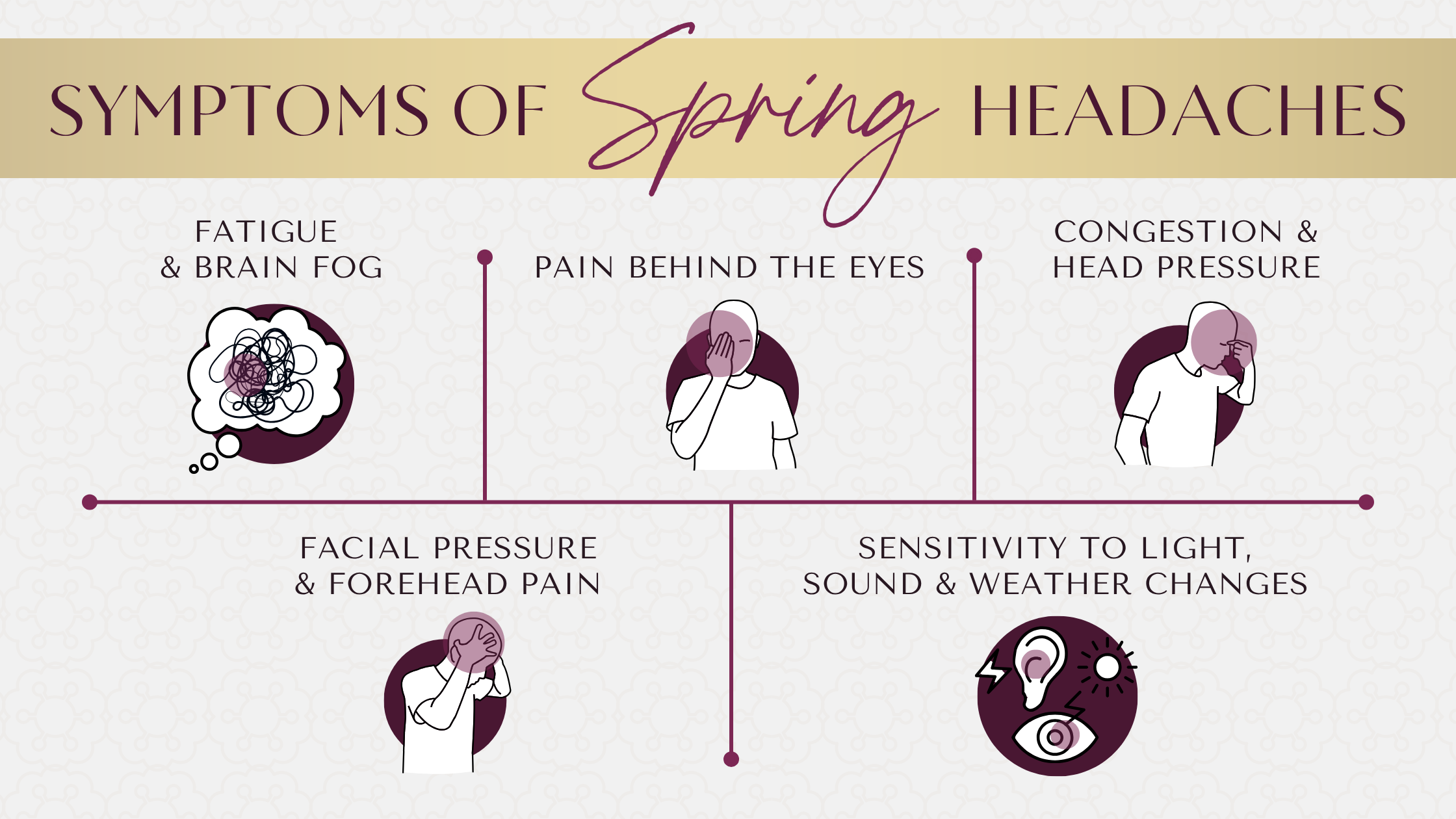 Spring headaches can present with a wide range of symptoms — from facial pressure and congestion to fatigue, brain fog, and migraine-related sensitivity.
Common Symptoms of Sinus Headaches
What Sinus Headache Symptoms Can Feel Like
Spring headaches can present differently from person to person depending on the underlying trigger. Some people experience facial pressure and congestion, while others notice migraine-like symptoms triggered by weather changes, allergies, or sinus inflammation.
Common Sinus Headache Symptoms
Facial Pressure & Forehead Pain
One of the most common symptoms of spring headaches is pressure or aching around the forehead, cheeks, and sinus areas. Inflammation and congestion within the sinuses can create a heavy, tight sensation that may worsen throughout the day or when spending time outdoors.
Pain Behind the Eyes
Sinus inflammation and pressure buildup can also cause discomfort behind or around the eyes. Some people notice this pain becomes more noticeable when bending over, during weather changes, or when allergy symptoms are particularly severe.
Congestion & Head Pressure
Spring headaches are often accompanied by nasal congestion, sinus fullness, and a feeling of pressure throughout the head. This can create a “stuffed up” or heavy sensation that may make it difficult to focus or feel clear-headed.
Fatigue & Brain Fog
Seasonal allergies and frequent headaches can leave many people feeling tired, mentally foggy, or drained. Inflammation, disrupted sleep, changing weather patterns, and ongoing discomfort can all contribute to fatigue during spring months.
Sensitivity to Light, Sound & Weather Changes
Some spring headaches may include symptoms more commonly associated with migraines, such as sensitivity to light or sound, throbbing pain, nausea, or worsening symptoms during storms and rapid weather changes. These symptoms can make it difficult to tell whether you’re experiencing a sinus headache or a migraine.
Because symptoms can overlap so closely, many people assume they’re experiencing sinus headaches when they may actually be dealing with migraines.
Sinus Headache vs. Migraine: How to Tell the Difference
Why Many “Sinus Headaches” Are Actually Migraines
Many people assume they’re experiencing sinus headaches when they may actually be dealing with migraines. In fact, research shows that migraines are commonly misdiagnosed as sinus headaches because the symptoms can overlap so closely.
Shared Symptoms of Sinus Headaches & Migraines
Both sinus headaches and migraines can cause:
-
- Facial pressure
- Forehead pain
- Pain behind the eyes
- Nasal congestion
- Weather-related symptoms
Because the symptoms can overlap so closely, many people have difficulty telling the difference between sinus headaches and migraines without a proper evaluation.
Symptoms More Commonly Linked to Migraines
However, migraines are more likely to include:
-
- Throbbing or pulsing pain
- Sensitivity to light or sound
- Nausea
- Worsening pain with activity
- Symptoms triggered by stress, sleep changes, or weather shifts
Learn more about common migraine symptoms and treatment options.
Symptoms More Commonly Linked to Sinus Headaches
True sinus headaches are typically associated with an active sinus infection and may include:
-
- Fever
- Thick or discolored mucus
- Significant nasal drainage
- Facial tenderness related to infection
Explore additional information about sinus headache symptoms and care.
Because symptoms can look so similar, many people spend years treating what they believe are sinus headaches without realizing migraines may actually be the underlying cause. Getting the right diagnosis is one of the most important steps toward finding effective, long-term relief.
SCHEDULE HEADACHE CONSULTATION
 Because headache symptoms can overlap, getting an accurate diagnosis is an important step toward finding the right treatment approach.
Weather & Barometric Pressure Headaches
How Spring Storms & Pressure Swings Can Trigger Headaches
Spring weather patterns can be unpredictable — especially in North Dakota and Minnesota. Rapid changes in temperature, humidity, storms, and barometric pressure are common during seasonal transitions and can become major headache triggers for some people.
According to the American Migraine Foundation, changing barometric pressure — also called atmospheric pressure — can be a significant trigger for people prone to migraines and weather-related headaches.
When pressure changes quickly before or during storms, it can affect nerves, blood vessels, and pressure regulation within the body. For people prone to migraines, these shifts may trigger headache symptoms or increase overall sensitivity.
Some people notice headaches developing:
- Before storms arrive
- During sudden weather changes
- On especially windy or humid days
- When temperatures fluctuate rapidly
Weather-related headaches can feel frustrating because they often seem unpredictable or difficult to control. Tracking weather patterns alongside headache symptoms can sometimes help identify trends and better understand potential triggers over time.
Some people also find it helpful to use apps like WeatherX, which can alert users to upcoming barometric pressure changes so they can prepare more proactively for potential headache or migraine symptoms.
Lifestyle Factors That Can Worsen Sinus Headaches
How Seasonal Routine Changes Can Increase Headache Triggers
Spring often brings changes in schedules, routines, and daily habits — all of which can contribute to headaches and migraines. While these shifts may seem small individually, several triggers happening at once can increase overall headache sensitivity.
Sleep Disruptions & Changing Schedules
Longer daylight hours, busy spring activities, travel, and shifting routines can all impact sleep quality and consistency. Poor sleep is a well-known headache and migraine trigger, especially for people already prone to weather- or stress-related headaches.
Learn more about the connection between sleep and headaches from the American Migraine Foundation.
Dehydration & Increased Outdoor Activity
As temperatures rise and people spend more time outdoors, dehydration can become more common during spring and summer months. Even mild dehydration may contribute to headaches, fatigue, and increased migraine sensitivity.
If you frequently experience dehydration-related headaches or migraines, explore Transcend’s vitamin IV infusion options for hydration and symptom support.
Stress, Activity Levels & Nervous System Sensitivity
Spring schedules often become busier with sports, travel, outdoor activities, and social events. Increased stress, overstimulation, and physical exhaustion can all contribute to headaches — especially when combined with weather changes or allergies.
For people prone to migraines, multiple triggers happening at once can increase nervous system sensitivity and make headaches more frequent or severe over time.
EXPLORE PERSONALIZED HEADACHE SERVICES
 Understanding the difference between sinus headaches and migraines can help patients better recognize triggers and symptoms over time.
Tips to Reduce Spring & Sinus Headaches
Simple Ways to Minimize Seasonal Headache Triggers
While spring headaches may not always be completely preventable, identifying and managing triggers can often help reduce the frequency or severity of symptoms.
Stay Ahead of Seasonal Allergies
Managing allergies early may help reduce sinus inflammation and pressure before symptoms worsen. Monitoring pollen levels, changing air filters, showering after outdoor exposure, and discussing allergy management with your provider may all help minimize spring headache triggers.
The American College of Allergy, Asthma & Immunology offers additional seasonal allergy tips.
Track Headaches & Weather Patterns
Keeping a headache journal can help identify patterns related to weather changes, allergies, sleep, hydration, stress, or activity levels. Over time, tracking symptoms may help you better understand what’s contributing to your headaches.
Prioritize Hydration & Sleep Consistency
Consistent sleep schedules and proper hydration are two of the most important foundations for reducing headache frequency. Even small improvements in these areas can make a meaningful difference for some people.
Learn more about lifestyle-based habits that support headache and migraine treatment from the Transcend Headache Clinic blog.
Seek Support for Recurring Symptoms
If spring headaches continue to interfere with your work, sleep, or daily life, it may be time for a more personalized evaluation. Specialized headache care can help identify underlying triggers and build a treatment plan tailored to your symptoms and lifestyle.
When to See a Specialist for Sinus Headaches
When Spring Headaches May Need More Than At-Home Relief
Occasional headaches during seasonal changes can be common, but recurring or worsening symptoms shouldn’t be ignored — especially when they begin interfering with your daily life.
If you’re experiencing frequent headaches, increasing migraine symptoms, persistent sinus pressure, or headaches that don’t improve with over-the-counter medications, it may be time to seek a more thorough evaluation.
Many people spend years self-treating headaches without realizing their symptoms may be connected to migraines, nervous system sensitivity, weather triggers, or other underlying conditions. An accurate diagnosis is one of the most important steps toward finding effective, long-term relief.
A headache specialist can help identify:
- Potential headache triggers
- Whether symptoms may actually be migraines
- Patterns related to weather, allergies, stress, or lifestyle
- Personalized treatment options based on your symptoms and history
You don’t have to keep guessing what’s causing your headaches — or continue pushing through symptoms that affect your work, sleep, energy, or quality of life.
 Specialized headache care in Fargo-West Fargo can help patients better understand recurring symptoms, seasonal triggers, and long-term treatment options.
Sinus Headache Treatment in Fargo & West Fargo
Specialized Care for Seasonal Headaches & Migraines
If you’re searching for spring headache relief in Fargo, West Fargo, or the surrounding Fargo-Moorhead area, specialized care is available close to home.
Transcend Headache Clinic focuses exclusively on headache and migraine disorders — offering personalized, patient-centered care designed to identify the root cause of your symptoms and create a treatment plan tailored to your needs.
Whether your headaches are connected to allergies, sinus pressure, weather changes, migraines, or overlapping triggers, our team works to help you better understand your symptoms and find effective, long-term relief.
Spring headaches can feel frustrating and unpredictable, but you don’t have to navigate them alone. Schedule your consultation online or call 701.809.7650 to explore personalized treatment options at Transcend Headache Clinic.

Transcend Headache Clinic believes no one should have to live with chronic pain or uncertainty. Founded by neurology-trained nurse practitioners Kyrie Severson, APRN, AQH, and Tiffany Eslinger, APRN, AQH, our West Fargo team pairs advanced expertise with a deeply personal approach to help patients overcome headaches and migraines — and get back to life.